
Ellie 8.10: Manage and Migrate with Ease – Enhanced Relationship Control in Ellie
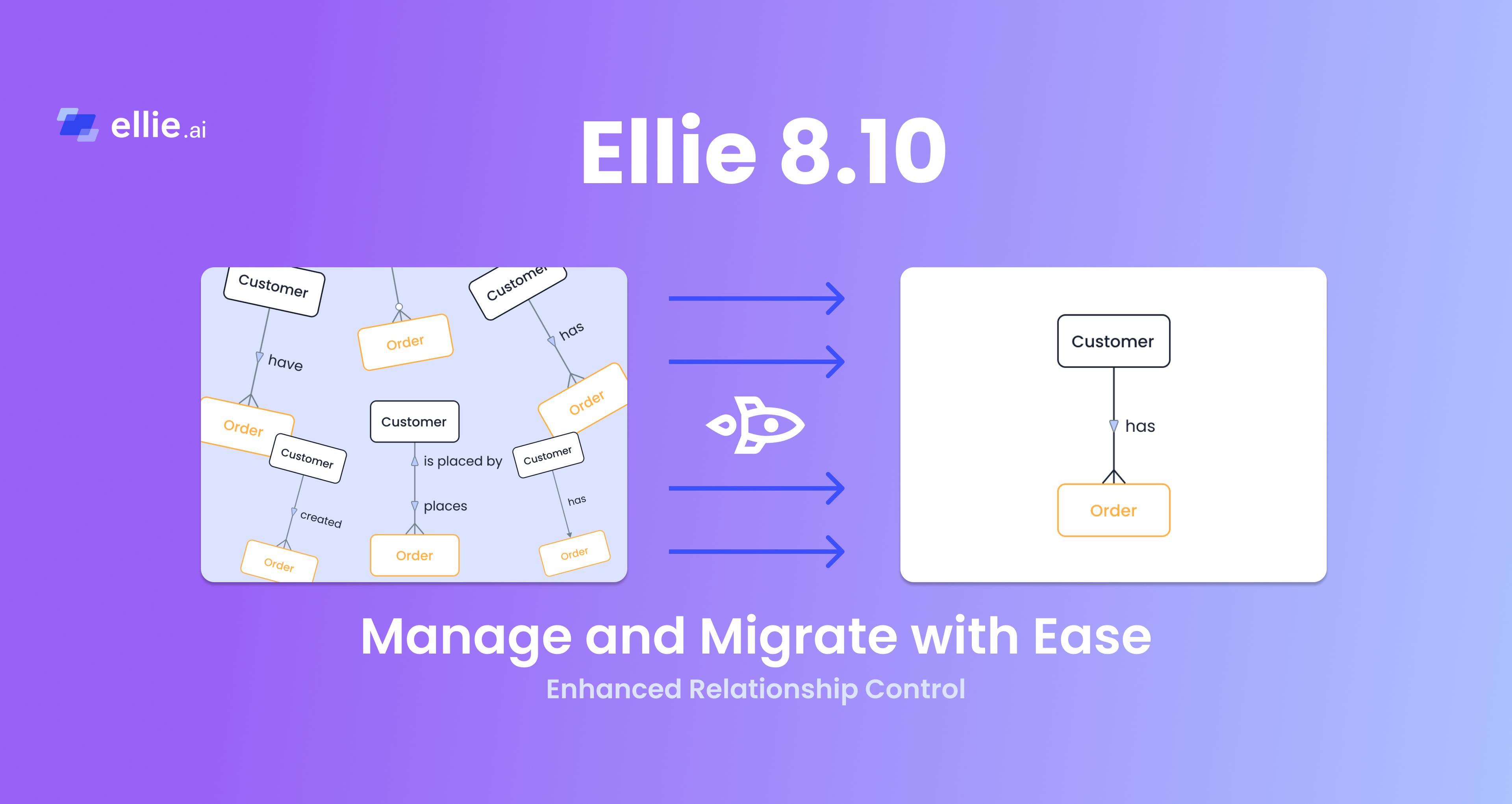
Ellie 8.10 turns glossary relationships into fully manageable assets: browse and edit them in a dedicated page, and replace local relationships in bulk to standardize faster.
Abstract
Ellie 8.10 elevates relationships from model-local constructs to fully shared, reusable enterprise assets. Prior to this release, relationships were defined within the context of individual models — meaning the same conceptual connection between entities might be defined differently across models, creating semantic inconsistency. With 8.10, relationships can be defined once in the glossary, reused across any number of models, and managed centrally. This change has significant governance implications: relationship standards can now be enforced at the enterprise level, and changes to a shared relationship propagate consistently across all models that reference it.
From Reuse to Full Control
With the previous release, glossary relationships made it possible to reuse relationships across models and keep them consistent automatically. That was the first step.
In this release, we're moving from reuse to full control. Relationships are no longer just reusable — they are manageable assets in their own right. You can curate them in the glossary, edit them in a dedicated view, and migrate local connections into the glossary faster than ever.
It's about giving you the tools to not only create reusable relationships, but also organize, standardize, and scale them with confidence.
What's New
Manage Glossary Relationships Directly
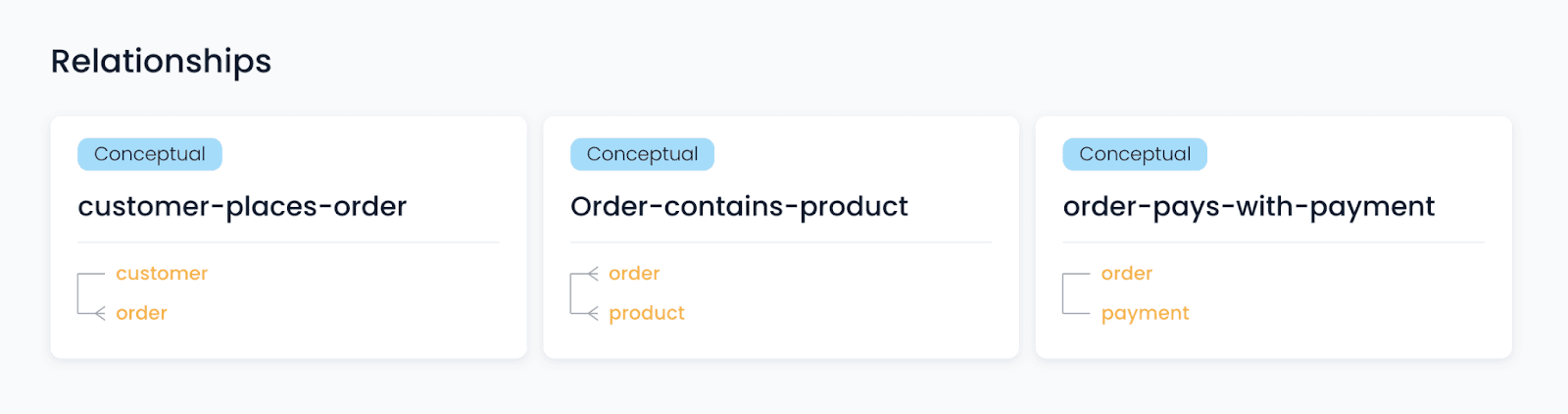
Until now, glossary relationships could only be handled through the canvas. In this release, they have a dedicated place in the glossary, where you can browse the full list of relationships in any selected glossary. This gives you full visibility into shared connections and lets you manage relationships just as you do with entities, making it easier to curate and keep your glossary organized as it grows.
Dedicated Relationship Page
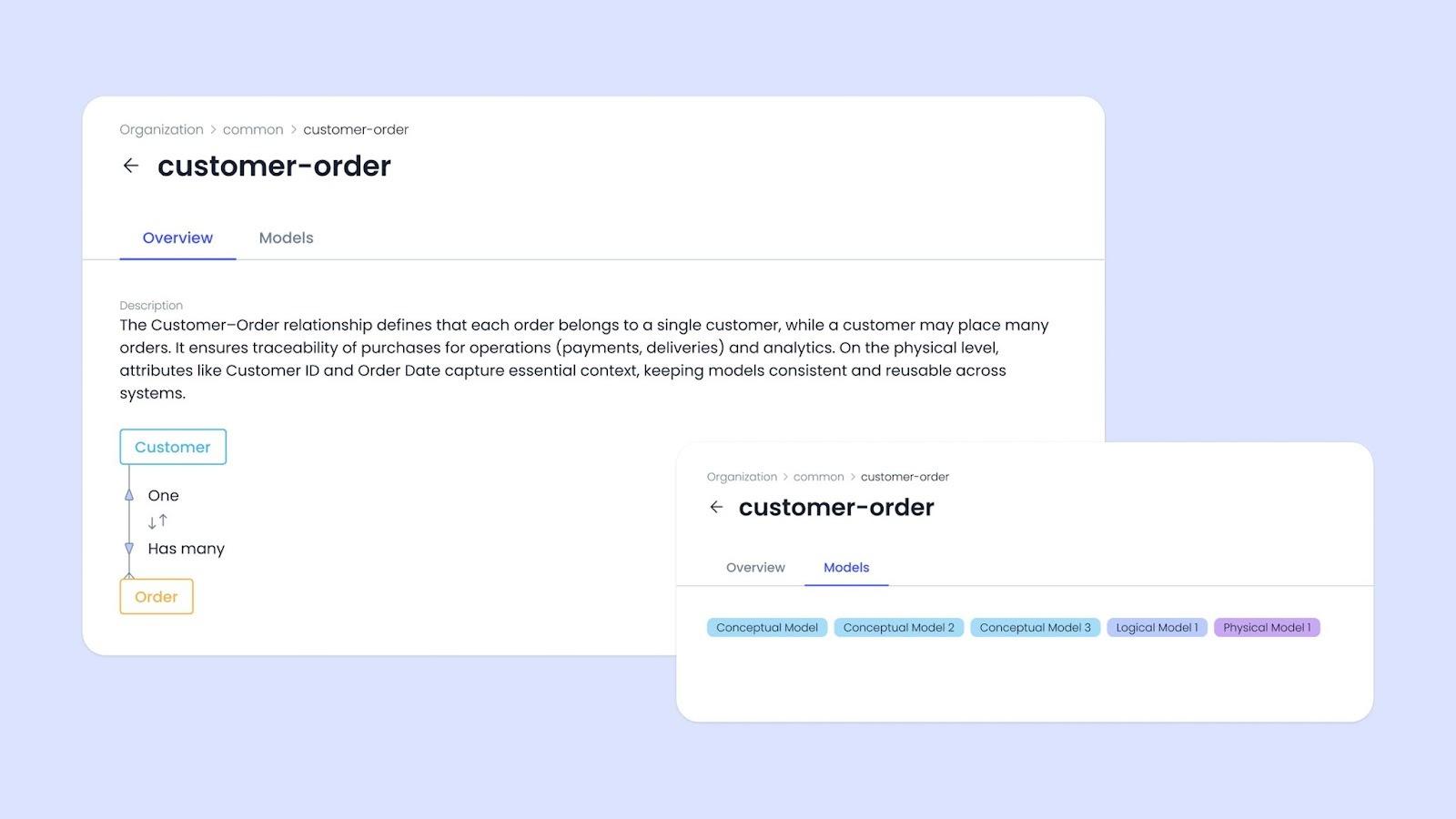
Every glossary relationship now has its own single relationship view. Here you can edit details in a focused view and see which models are using that relationship.
This page turns relationships into manageable assets, giving you a clear control center for editing and auditing how each relationship is applied across your models.
Replace to Standardize
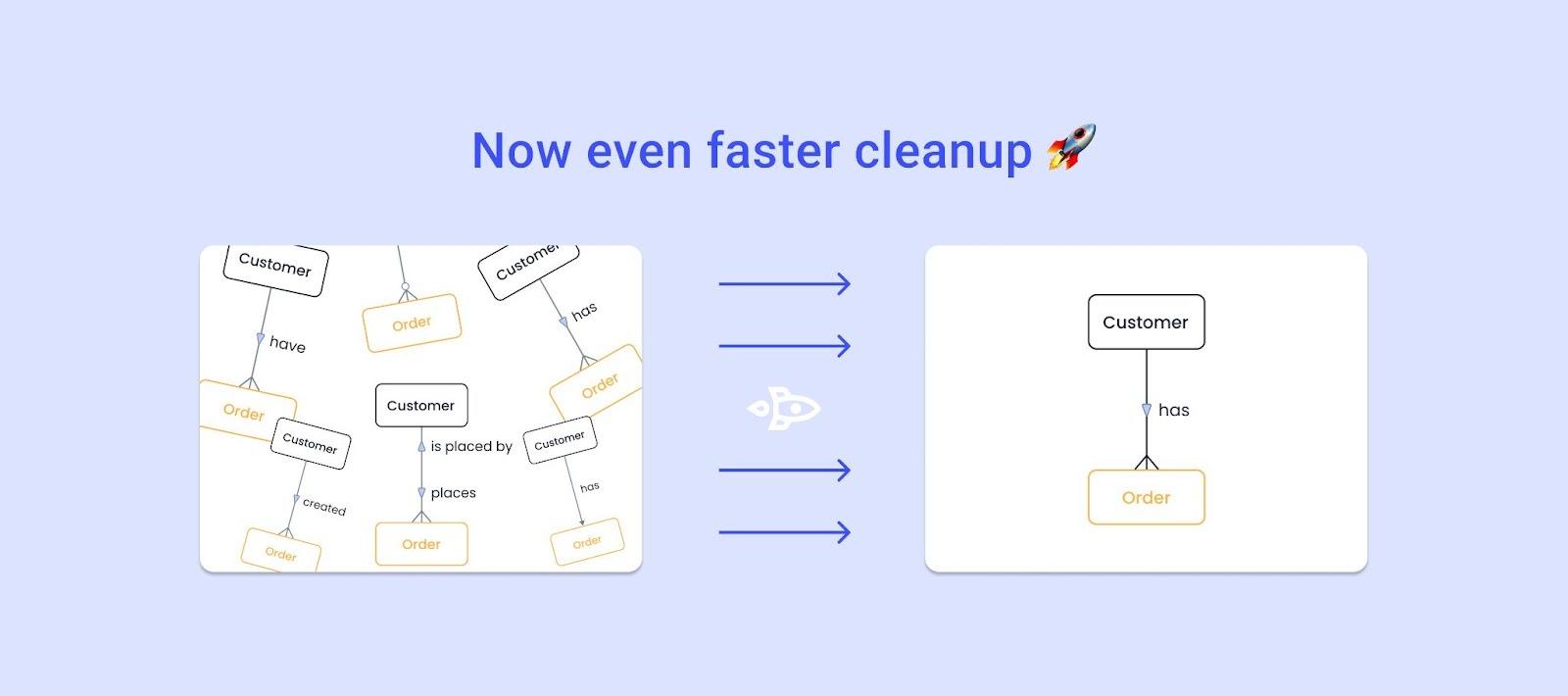
One of the biggest challenges with introducing glossary relationships is migration — replacing old local relationships with glossary ones can be tedious. This release introduces a replace feature to make the process much faster.
In the modeling context, you can replace relationships one by one to refresh your model with glossary assets. You can also replace logical and physical entities with glossary assets in the same way, if you haven't tried this feature yet.
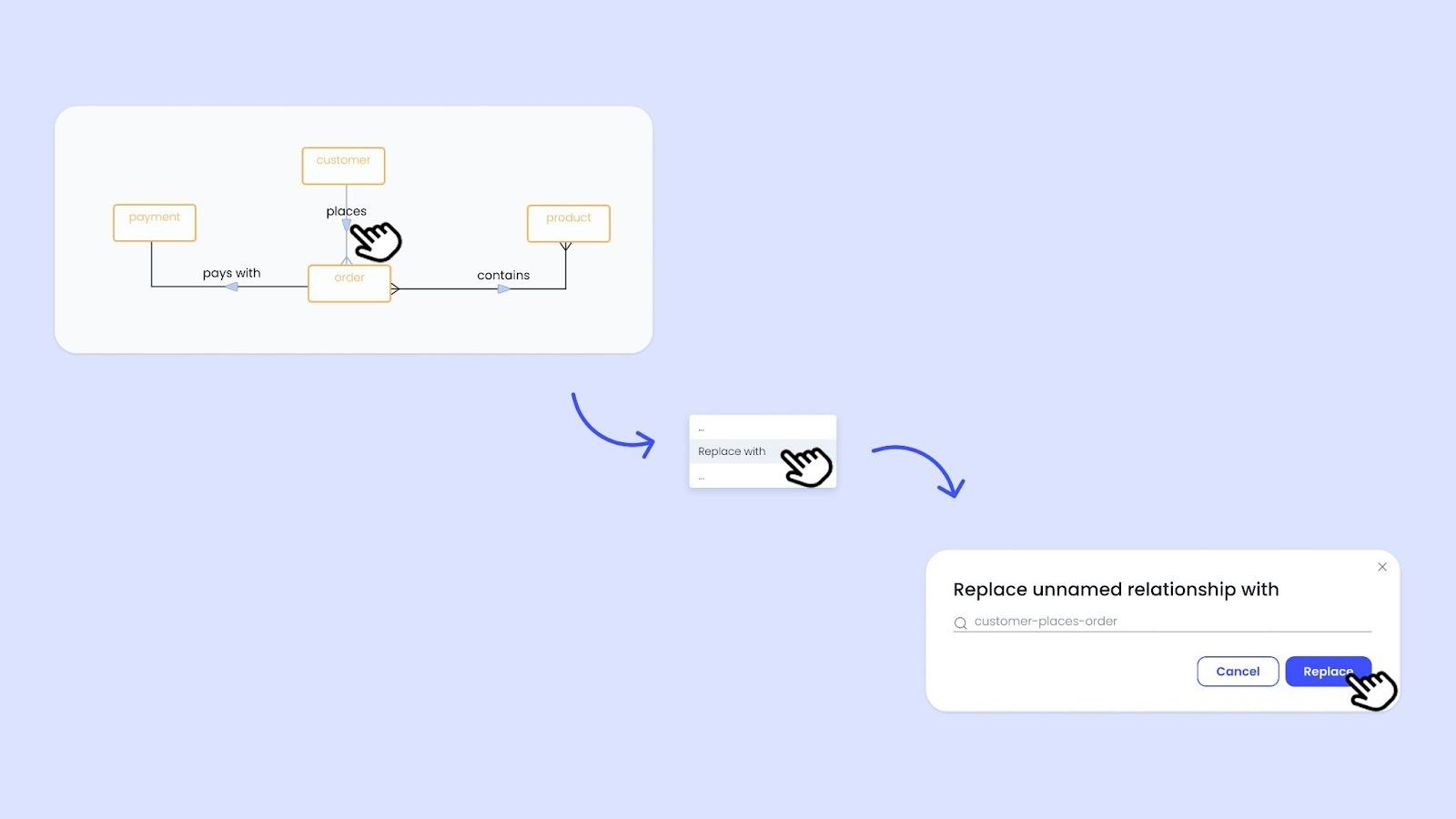
For larger cleanups, go to the single entity view of the linked entity. There, you can see all duplicates in one place and replace them in bulk — no need to switch back and forth between models.
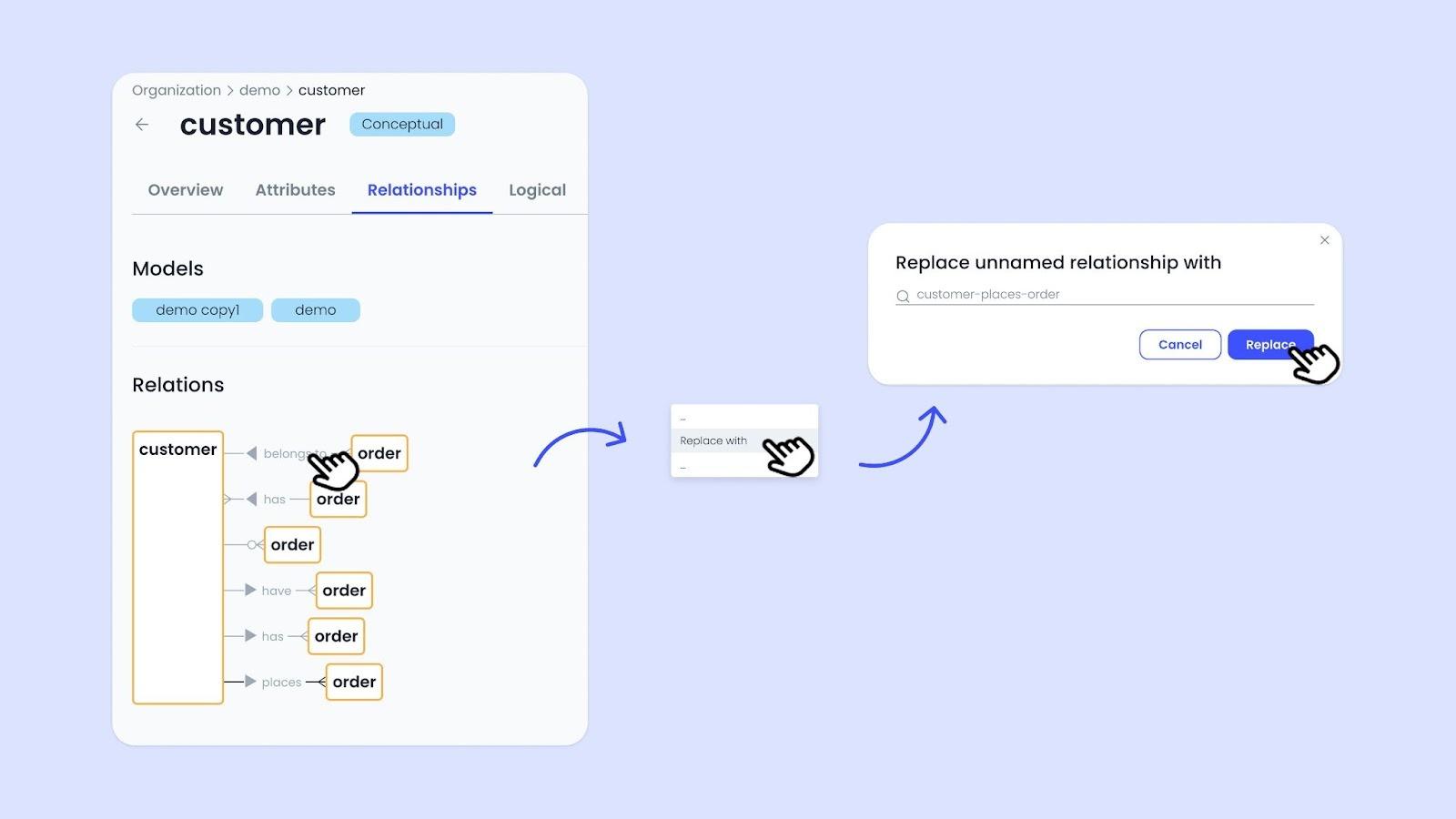
This is a powerful way to remove redundancy and align your models with shared definitions. Just make sure you review carefully before replacing, as local properties will be discarded in the process.
Why This Matters
Reusable relationships unlocked consistency, but without management, standardization could still be slow and manual. This release changes that by giving you:
- Visibility: see all glossary relationships in one place.
- Control: edit relationships in a dedicated page and track where they're used.
- Faster migration: replace locals with glossary assets, either directly in a model or from the view of a connected entity.
- Consistency: curate relationships the same way you already manage entities.
Together, these improvements help you move faster toward a clean, governed modeling environment — without losing flexibility along the way.
The Reusability Journey Continues
This release is another step in strengthening relationships as shared assets. The foundation of reusability is already here — relationships can be defined once, reused across models, and now managed directly in the glossary.
What comes next is about making the experience more complete and effortless: filling in the missing pieces and adding the polish that makes reusability feel natural in everyday modeling.
The journey isn't finished, but with each release, glossary relationships become an even smoother and more reliable part of Ellie.
Try It in Ellie
- Open a glossary.
- Browse the full list of relationships.
- Enjoy a new level of control over how relationships are managed.
If you haven't started with reusable relationships yet, check out our previous post: Ellie 8.8: Turn Ad-Hoc Relationships into Reusable Standards
📘 For more details, check out our user guide or contact support@ellie.ai.
Ellie.ai Team
Ellie.ai
The team behind Ellie, writing about semantic data modeling, enterprise data architecture, and building the backbone for trustworthy AI.