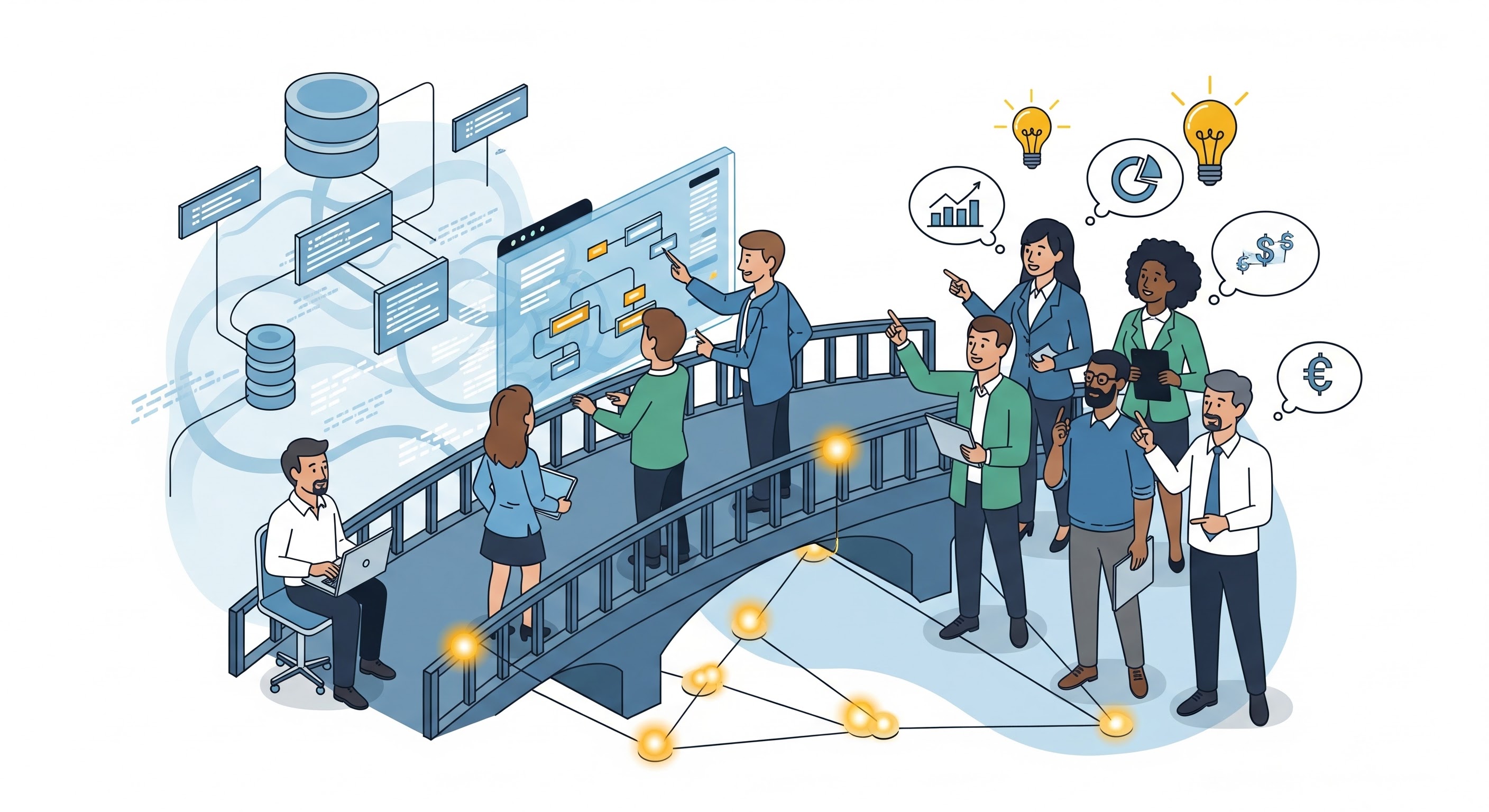

Many organizations struggle to keep teams aligned around data. Business stakeholders, governance teams, analysts, and technical teams often work from different definitions, disconnected documentation, and separate workflows that make reporting and decision-making difficult.
Traditional data modeling tools often contribute to these problems because they were built for technical documentation instead of cross-functional collaboration. In this article, we’ll explore seven reasons why data modeling tools fail stakeholders and what organizations should look for in a more collaborative modeling environment.
One of the biggest problems with traditional data modeling tools is accessibility. Many models are highly technical and designed primarily for architects, engineers, or database administrators. While technical accuracy is important, organizations run into problems when broader stakeholders can’t interpret or engage with the models themselves.
Governance teams, business stakeholders, analysts, and compliance leaders often struggle to understand how systems relate, which definitions are authoritative, or how architectural decisions affect reporting and operations. As a result, important governance and business discussions happen outside the modeling environment. This creates alignment gaps between technical implementation and business understanding.
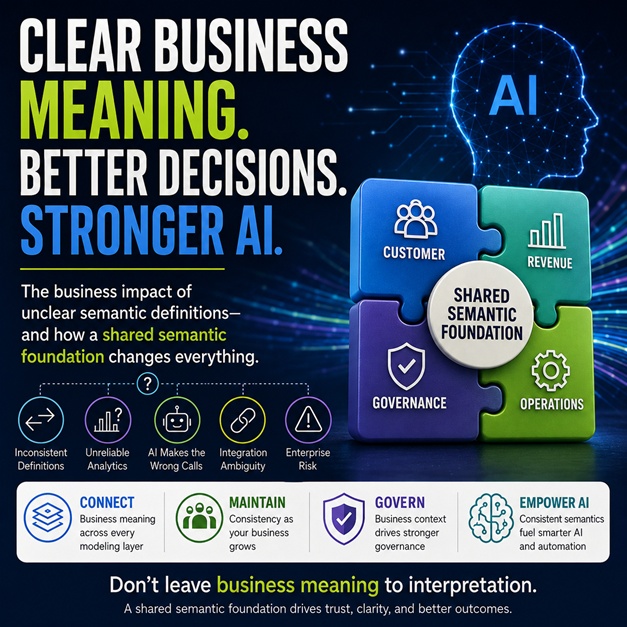
Semantic inconsistency is one of the most common causes of enterprise reporting and governance issues. Different teams often define core business concepts differently depending on the department, reporting environment, or system involved. Metrics, ownership structures, customer entities, and product classifications may all vary across teams.
For example:
Over time, these inconsistencies make enterprise reporting harder to standardize and govern. Without shared conceptual and semantic alignment, organizations struggle to maintain consistent business understanding across systems and teams.
Modern modeling environments like Ellie.ai support integrated business glossaries and dictionaries that help organizations standardize terminology and maintain consistent definitions across domains. This creates stronger alignment between governance, reporting, and operational teams over time.
In many organizations, collaboration around architecture is disconnected from the models themselves.
Stakeholders often review screenshots in presentations, provide feedback in spreadsheets, discuss changes in meetings, or manage approvals through email and chat tools. This creates fragmented communication and versioning confusion across teams.
As organizations scale, disconnected collaboration workflows make it increasingly difficult to maintain alignment between governance, architecture, reporting, and operational processes. Modern modeling environments should support collaboration directly within the workflow rather than forcing teams to coordinate through disconnected systems.
Platforms like Ellie.ai support real-time collaboration directly within the modeling environment, allowing stakeholders to leave comments on models, participate in structured design reviews, and maintain discussions within the context of the architecture itself. This helps reduce fragmented feedback workflows and improves visibility across technical and business teams.
Many organizations still manage governance and modeling as separate processes. Governance documentation may exist in spreadsheets, stewardship platforms, policy documents, or ticketing systems while modeling workflows happen independently within technical teams.This separation creates visibility gaps across ownership, stewardship, approvals, and governance accountability. It also makes it harder to understand how governance decisions connect to the underlying architecture. Strong governance depends on shared visibility into how entities, relationships, ownership structures, and business definitions connect across systems.
Enterprise systems evolve constantly. Organizations introduce new data sources, modernize infrastructure, update reporting requirements, and adopt new governance processes over time. Despite these ongoing changes, many organizations still rely on static models that are updated manually and reviewed infrequently.
As systems evolve, models gradually drift away from operational reality. Once this happens, they stop functioning as reliable governance and architecture assets. Outdated models create downstream problems for governance initiatives, reporting consistency, AI readiness, and enterprise decision-making because teams can no longer trust that the documentation reflects how the organization actually operates.
Version control and collaborative modeling workflows help organizations manage architectural changes more effectively as systems evolve. Instead of relying on static documentation, teams can continuously update and review models as governance requirements and business processes change.
Many enterprise stakeholders struggle to understand who owns specific models, which definitions are authoritative, or how architectural decisions were approved. Without visibility into changes, governance reviews and cross-functional collaboration become significantly harder to manage.
This often creates dependency on tribal knowledge, where only a small number of technical stakeholders understand how systems, definitions, and governance decisions connect across the organization. Modern enterprises need modeling environments that improve transparency around ownership, approvals, relationships, and architectural evolution.
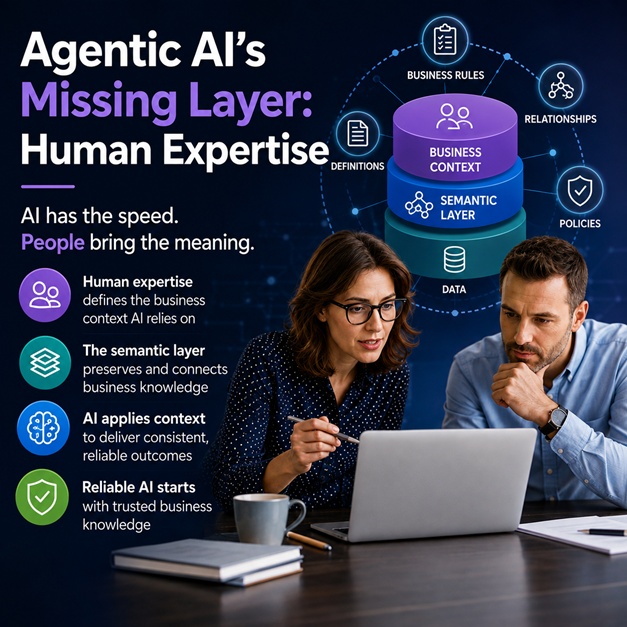
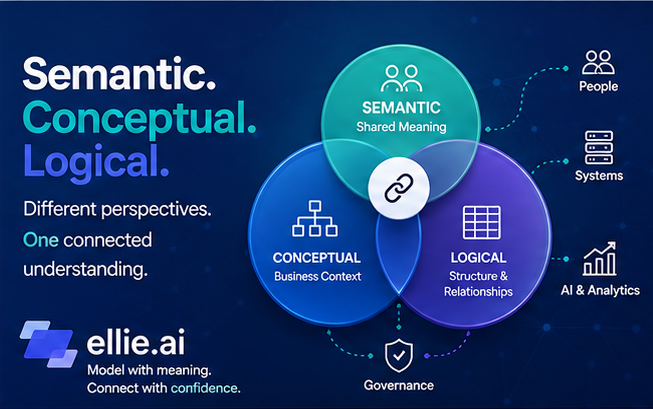
Many traditional modeling tools focus heavily on diagram creation rather than organizational understanding. While diagrams are useful, enterprise modeling isn’t just about documenting technical structures, it's about helping organizations align on definitions, ownership, relationships, governance requirements, and business meaning.
This becomes increasingly important as organizations scale across large enterprise ecosystems. Carlos Hernandez, Managing Partner at Data Foundations Consulting, described Ellie.ai as “a foundational platform” that helped his team onboard hundreds of tables and thousands of columns from Microsoft Fabric while maintaining business context across their environment. He also noted that the platform helped AI agents “understand how your data is structured and build better data products with a real understanding of what lives where.”
What Enterprises Should Look for in a Modern Modeling Environment
Modern enterprise modeling platforms need to support much more than technical documentation. Teams need modeling environments that improve collaboration, governance visibility, semantic consistency, and cross-functional alignment.
Organizations evaluating modern data modeling tools should look for capabilities that support both technical architecture work and broader business understanding across the enterprise.
Key capabilities to evaluate in a modern modeling platform:
As enterprise ecosystems become more complex, organizations increasingly need modeling environments that help align governance, architecture, and business understanding within a single workflow.
Build a More Collaborative Modeling Environment with Ellie.ai
Ellie.ai helps enterprises move toward collaborative, governance-aware modeling environments that connect business context with technical architecture decisions. Instead of limiting modeling to technical schema documentation, Ellie makes it easier for governance teams, architects, analysts, and business stakeholders to collaborate around shared definitions, relationships, ownership structures, and governance requirements. Get started with a free trial today.