
Designing a high-quality data model is a complex craft — but keeping it aligned with continuously evolving production systems is often the bigger challenge. This Ellie.ai API update focuses on closing that gap.
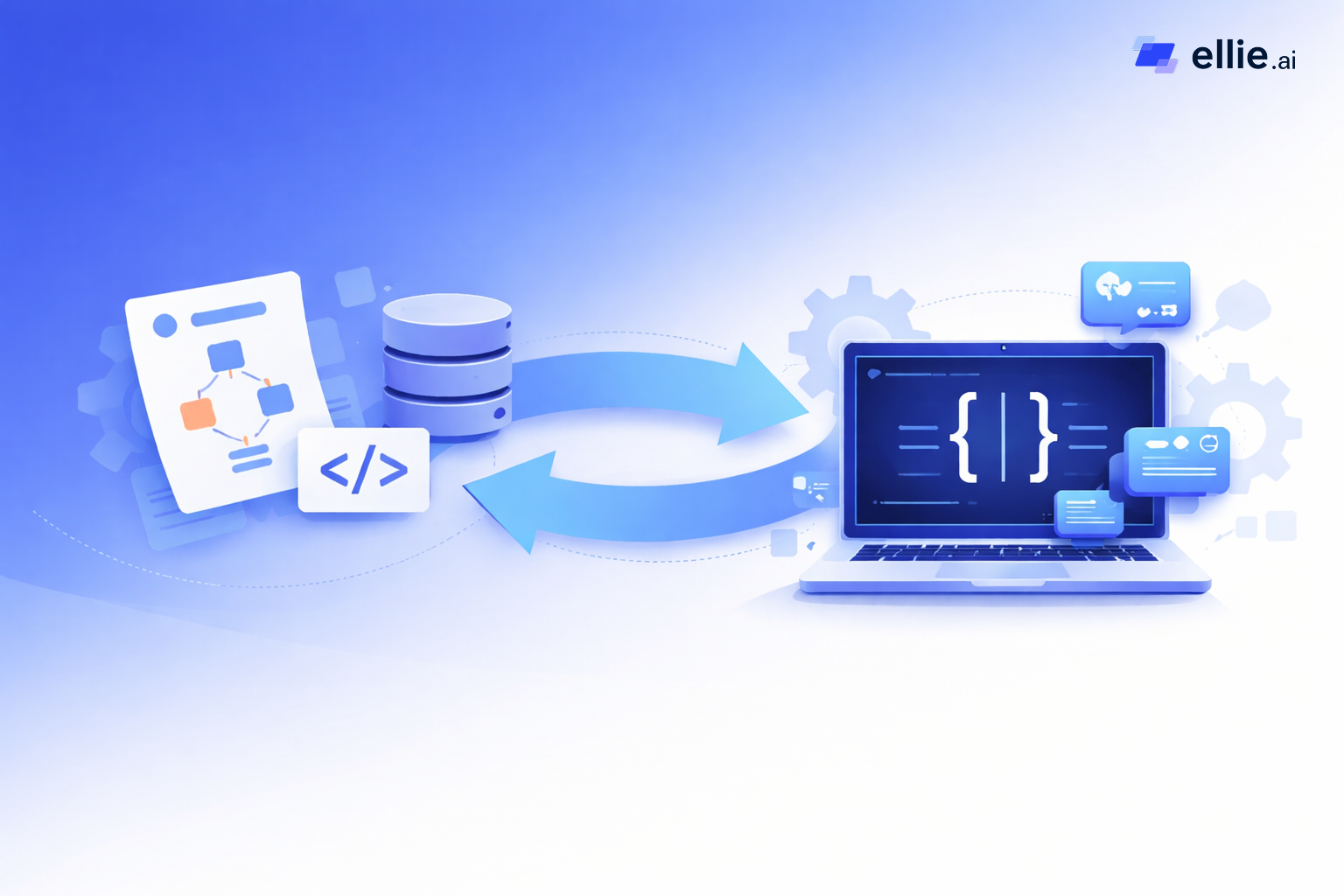
Ellie now supports full programmatic updates of data models, enabling models, entities, relationships, and metadata to be created, updated, retrieved, and managed directly via the API. This marks a shift from Ellie being a primarily UI-driven modeling environment to becoming a first-class component in automated data and metadata workflows.
To enable this, we’ve significantly overhauled our API architecture. The result is more granular control, improved performance at scale, and a clearer, more predictable developer experience.
Our API has matured from simple data access to a comprehensive management toolset. The updated API now supports full Create, Read, Update, and Delete operations using standard RESTful semantics.
This enables Ellie to act as a reliable write interface for external systems rather than just a downstream documentation target.
You can now programmatically access and update model- and asset-level metadata across your workspace using the Ellie API.
Ellie exposes metadata as flexible key–value metadata fields on models, entities, and attributes. This allows teams to apply consistent, machine-readable metadata conventions that can be used by external systems and automation pipelines.
Typical use cases include:
Because metadata is fully readable and writable via the API, teams can manage it at scale — without relying on manual updates in the UI.
This approach makes it possible to:
Importantly, this keeps Ellie flexible: metadata semantics can evolve over time without requiring schema changes, while still remaining fully accessible to both humans and systems.
The backend has been optimized to handle complex, large-scale models more efficiently.
This ensures that scripted workflows and integrations remain fast and predictable, even as model complexity grows.
Automate repetitive modeling and documentation tasks to keep your models in continuous sync across your entire data ecosystem.
Designed for Continuity
We prioritize backward compatibility so your current export workflows remain stable. While we’ve introduced significant upgrades, our core integration patterns stay consistent to ensure a reliable transition.
With clearer error handling, consistent semantics, and interactive documentation, we’ve removed the friction of embedding Ellie into modern data stacks.
Explore the updated API documentation to see the new endpoints in action and start building workflows where Ellie is not just documented — but actively integrated.
👉 View the API Documentation