
Blog

Thinking on semantic data modeling and the universal semantic layer, plus release notes on what's new in Ellie.

Why “Good Enough” Data Fails: How Semantic Drift Creates Silos, Rework, and Untrusted Metrics

How “good enough” data becomes normalized into team silos, duplicated fixes, and untrusted metrics, and the four signals, slower decisions, more time fixing than building, duplicated logic, and data that always needs explaining, that show it's time to intervene before a human-first semantic layer is in place.

Ellie 8.14: Email notifications

Ellie 8.14 adds email notifications for comments and @mentions, so architects and reviewers stay on top of shared-model activity without needing to stay logged in.

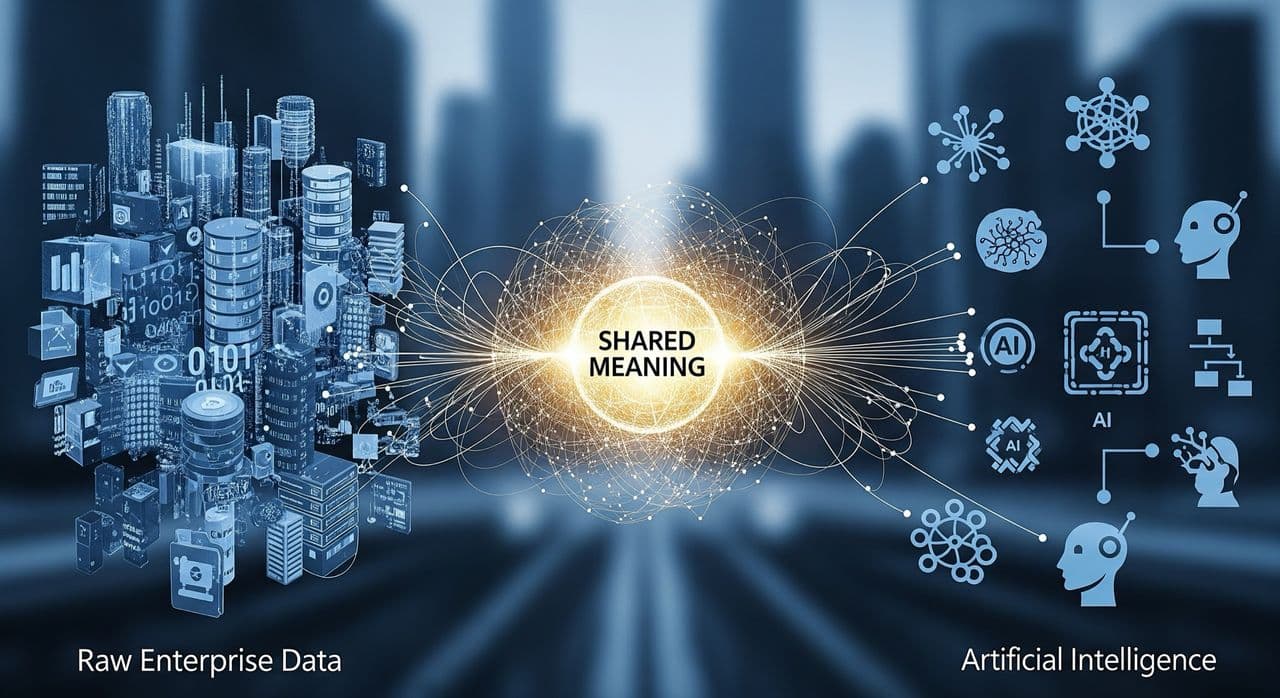
Illustration of raw enterprise data on the left and AI icons on the right, connected through a glowing shared-meaning core

Your Data Isn't AI-Ready: The Missing Semantic Layer Holding AI Back

AI adoption stalls in production because most data stacks lack a shared semantic layer. Explicit business definitions, not more automation, are what make data genuinely AI-ready.

Why Your Enterprise Data Tool Didn’t Work and How to Improve Your Tech Stack in 2026

Why modern enterprise data tools still fail to deliver shared understanding because they assume alignment already exists, and a seven-step framework for choosing 2026 tech stack tools, starting with the outcome and ending with a focused pilot that tests alignment rather than adoption.

Thinking Fast and Slow: Making Data Modeling Feel Natural

Applies Kahneman's fast/slow thinking framework to data modeling: Fast Mode for quickly sketching entities and relationships without overthinking, Slow Mode for adding governance and validated definitions, and switching fluidly between the two to make modeling a daily habit rather than a quarterly chore.

Start With Meaning: Why Data Modeling Belongs at the Front of Every Data Initiative

Why data modeling must come before analytics, orchestration, and AI: a practical 8-step approach to starting with the model, from clarifying the decisions it should support and naming core entities to validating definitions with stakeholders and keeping the model alive as the business evolves.

10 Steps to Building Your First Data Model (Without Getting Lost in the Mess)

A 10-step guide to building your first data model, from clarifying business intent to validating sources with stakeholders, modeling with AI, and designing for long-term scale and governance.

ISO/IEC 27001:2022 certified badge

Ellie.ai Achieves ISO 27001:2022 Certification, Strengthening Enterprise-Grade Data Security for Global Customers

Ellie.ai has achieved ISO/IEC 27001:2022 certification, the internationally recognized standard for information security management, reinforcing its enterprise-grade security for global customers.

Ellie 8.10: Manage and Migrate with Ease – Enhanced Relationship Control in Ellie

Ellie 8.10 turns glossary relationships into fully manageable assets: browse and edit them in a dedicated page, and replace local relationships in bulk to standardize faster.

The 2026 Data Product Stack: What to Keep, Kill, and Combine

A 2026 audit of the data stack: what to keep (warehouse/lakehouse, modeling and semantic layer, governance, integration, analytics, collaboration, security), what to kill (redundant ETL tools, secondary BI platforms, shadow IT, DIY scripts), and where a connective modeling layer lets teams combine scattered glossaries and documentation into one system.

The Funnel of Data Layers Meets the Funnel of Business Functions

A parallel between the data funnel (raw sources, modeling, analytics, data products) and the business funnel (marketing awareness, sales qualification, conversions, customer success), with concrete ways business leaders can participate at each stage instead of leaving modeling to data teams alone.

Data Modeling Tools Compared: How Ellie.ai Brings Business Logic into the Model

A comparison of schema design, dbt, BI, and catalog tools shows they model structure, not meaning. Ellie.ai closes the gap by embedding business logic into the model itself.

Ready to See It in Action?

A 45-minute call with a data modeling expert, not a sales pitch.