
Model from Business Concept to Code
Full-Stack Data Modeling
Ellie enables data architects, modelers, and business teams to collaborate in real time—designing conceptual data products down to production-ready physical schemas.
30-minute tailored architecture walkthrough
Trusted by 60+ enterprise data teams • No credit card required
Enterprise Trust
Trusted by Forward-Thinking Enterprise Architecture Teams

Workflow Contrast
Unified Data Modeling vs Fragmented Legacy Stacks
Traditional workflows force teams to maintain conceptual ideas in drawing tools, logical models in desktop software, and physical code in Git—causing semantic drift. Ellie unifies all three tiers.
- Domain AlignmentBusiness stakeholders and architects co-design conceptual entities on a shared canvas
- Semantic ContinuityBusiness definitions map automatically into logical structures and physical columns
- Engineering VelocityGenerate production DDL and dbt-ready schemas directly from governed models
- AI GroundingCurated business context eliminates hallucinations in agentic AI and pipelines
- Domain AlignmentEngineers model in isolation while business context stays stranded in tickets and wikis
- Semantic ContinuityDefinitions drift across disconnected drawing files, transformation scripts, and BI tools
- Engineering VelocityManual schema handoffs and redundant re-keying create slow, error-prone release cycles
- AI GroundingUncurated physical tables produce erratic automated queries and untrusted insights
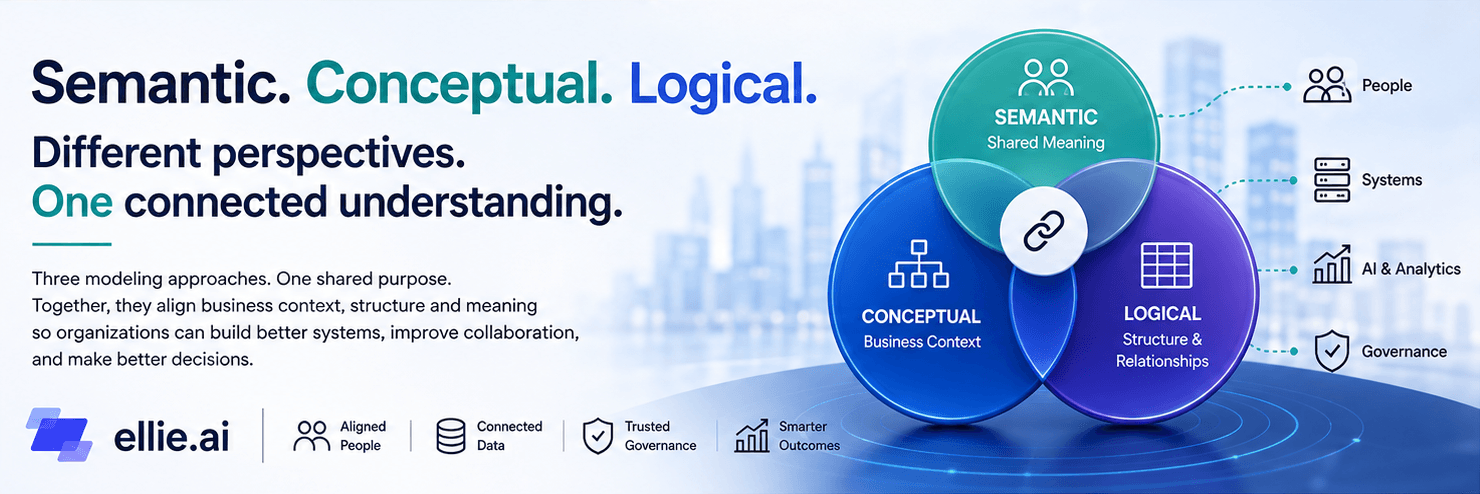
Three Modeling Tiers
Architectural Rigor from Concept to Execution
Design, govern, and deploy data structures seamlessly across conceptual, logical, and physical layers without losing business context.
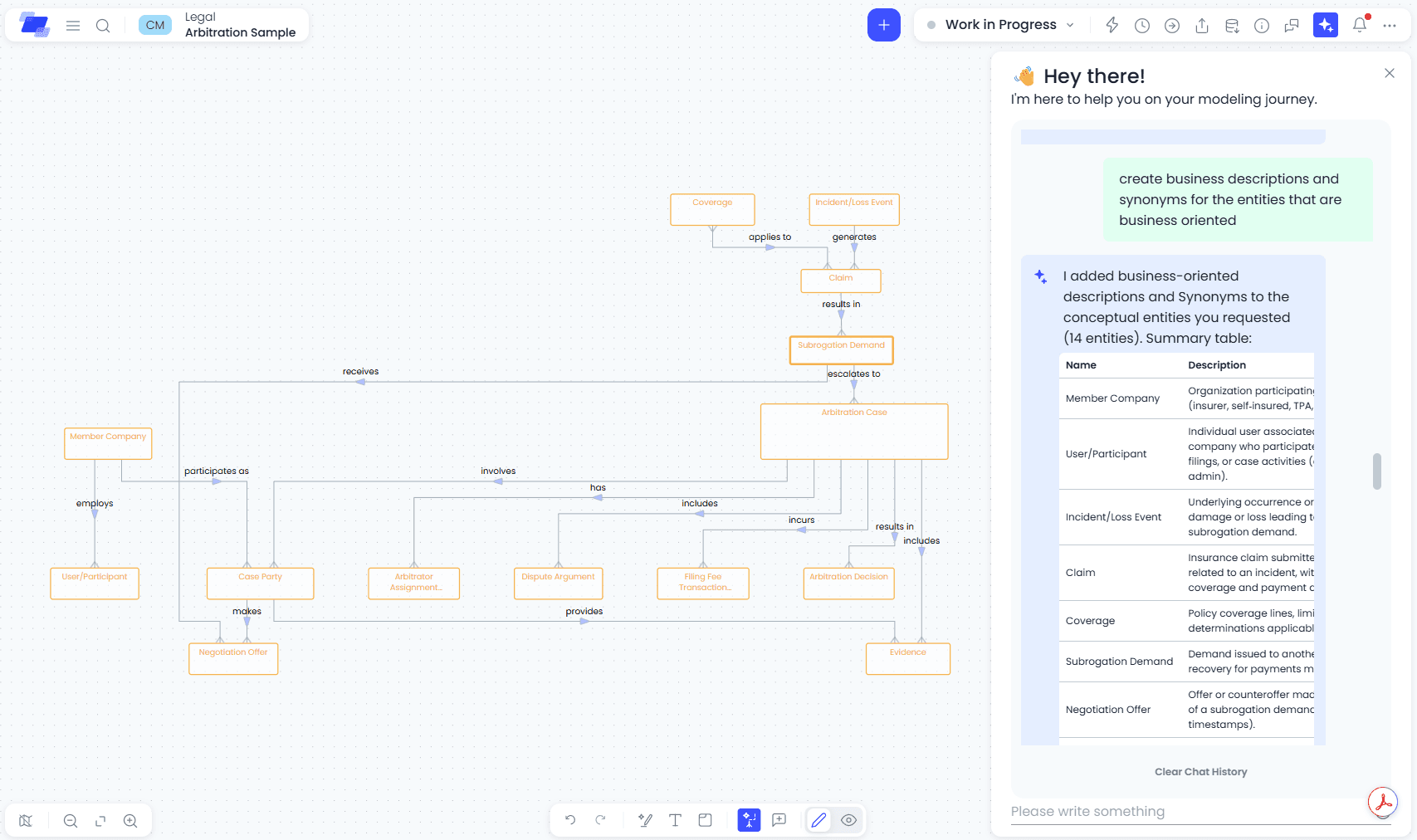
Tier 1: Business Context
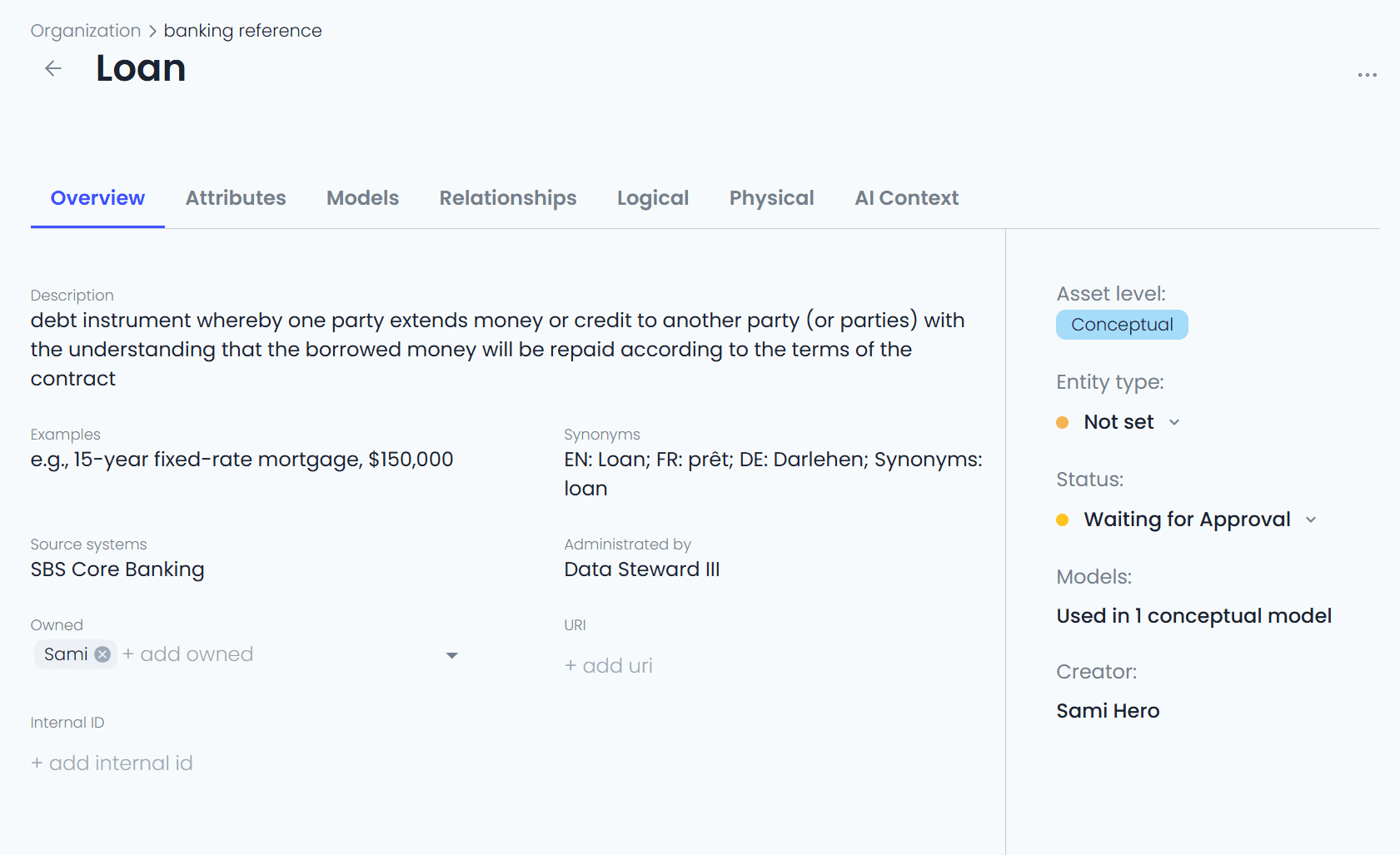
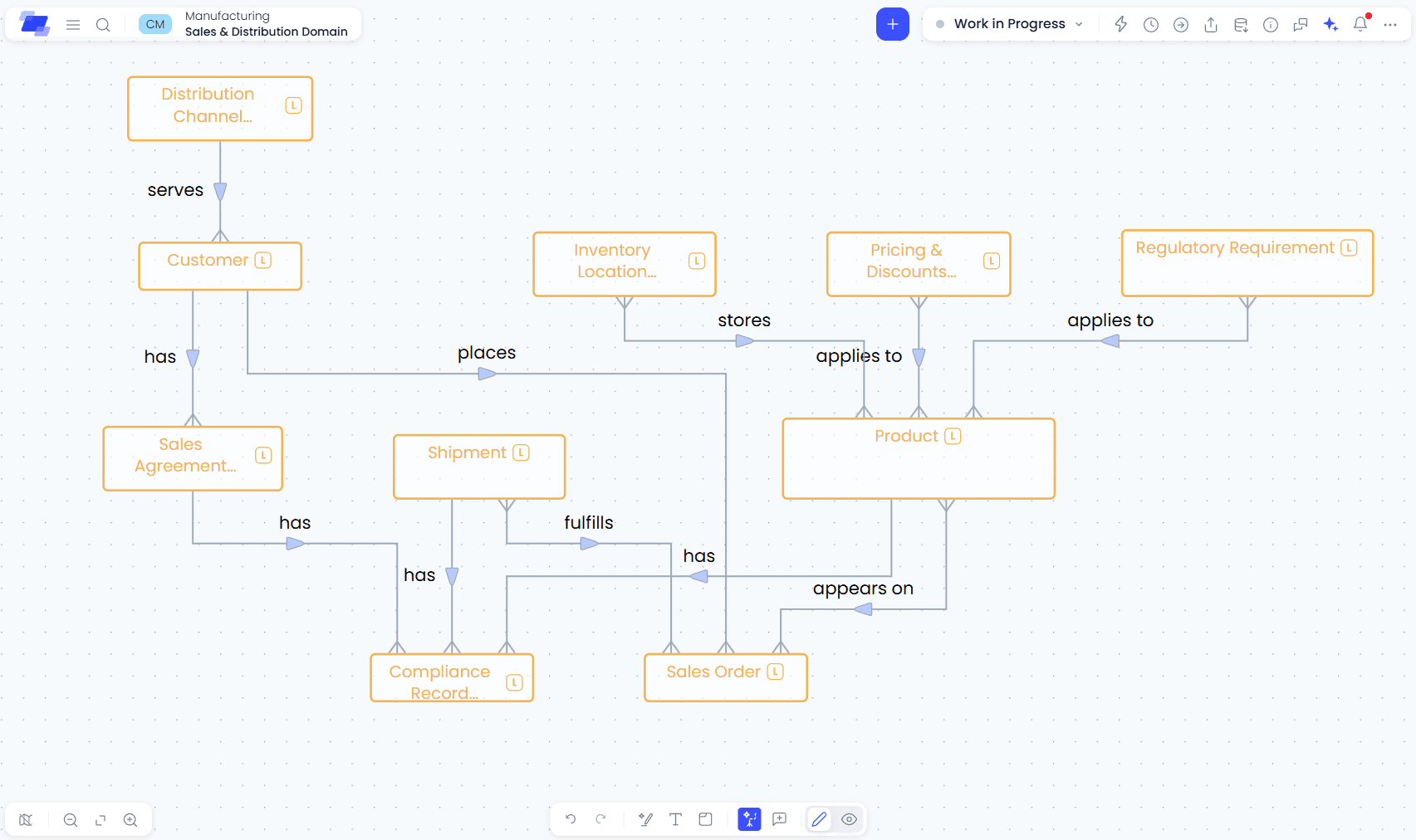
Conceptual Modeling: Capture Business Meaning
Collaborate with business stakeholders and domain owners to define core entities and relationships in plain language, resolving definitions before writing code.
- Real-time collaborative canvas for business and technical teams
- Integrated company-wide business glossary and sub-glossaries
- Lumi AI assistant to draft entity structures from meeting notes
Tier 2: Architectural Structure
Logical Modeling: Structure Entities and Rules
Transform conceptual entities into normalized logical structures with explicit cardinality, business keys, and data types while maintaining unbroken semantic links.
- Support for Data Vault 2.0, Kimball dimensional, and 3NF models
- Automatic inheritance of business definitions and validation rules
- Cross-domain entity reuse across distributed data mesh teams
Tier 3: Physical Execution
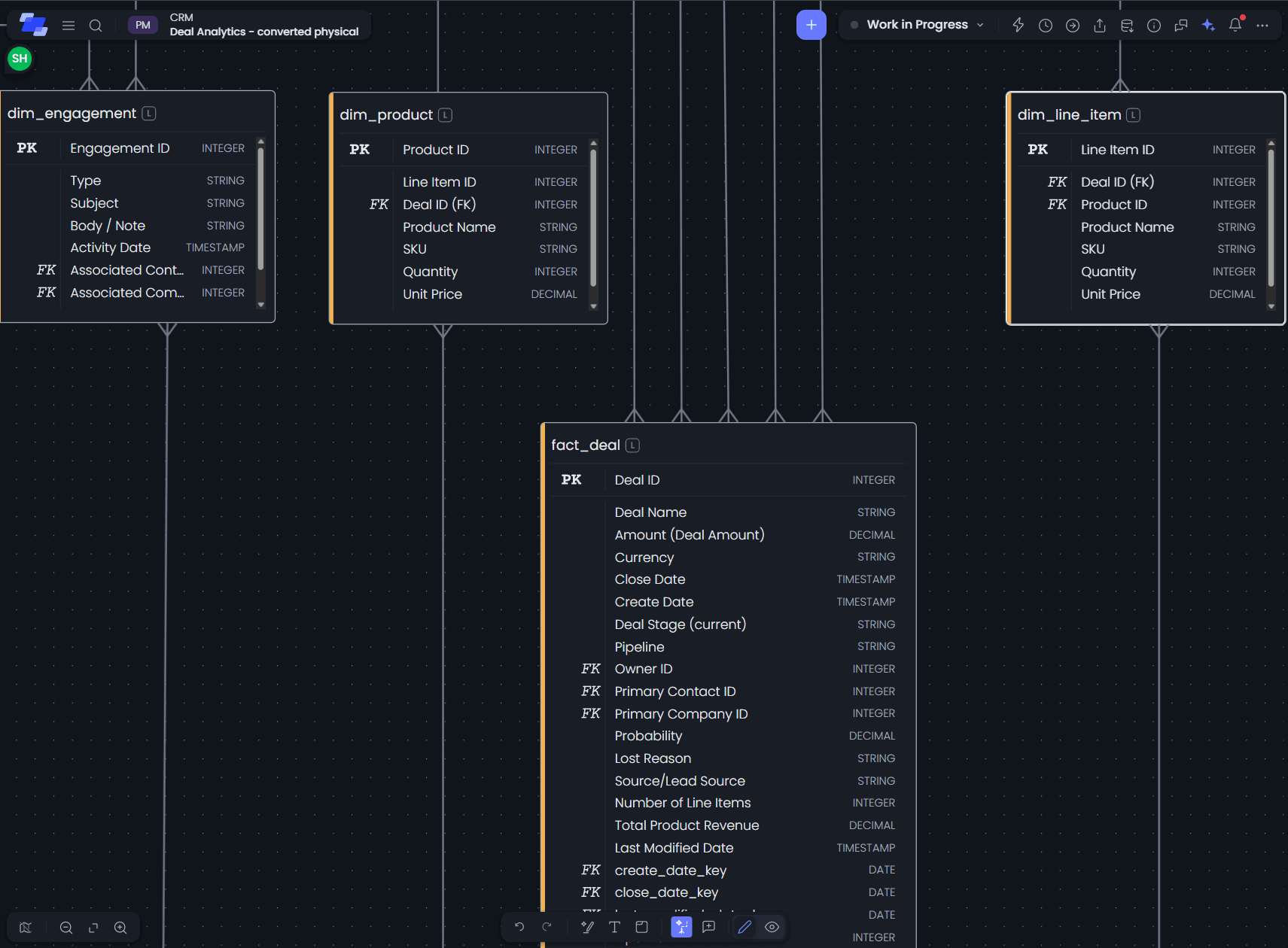
Physical Modeling: Deploy Production Schemas
Generate target-specific physical schemas with primary keys, indexes, partitioning, and storage constraints optimized for modern cloud warehouses.
- Support for Snowflake, Databricks, BigQuery, Fabric, and PostgreSQL
- Automated DDL script generation and schema migration diffs
- Push physical definitions directly to Git and CI/CD pipelines
Full Traceability
Continuous Full-Stack Synchronization
Maintain bidirectional traceability across all three modeling layers so changes in business requirements or source systems never create semantic drift.
- End-to-end lineage tracking from glossary terms to table columns
- Pre-deployment impact analysis for proposed schema changes
- Reverse engineer existing source systems with 160+ CData connectors
Workflow
Three Steps from Business Concept to Production Code
How enterprise architecture teams use Ellie to turn domain requirements into governed, production-ready data pipelines.
Draft Conceptual Entities with Lumi AI
Engage domain experts to capture business entities and definitions. Use Lumi AI to accelerate model creation from business briefs and transcriptions.
Refine Logical Schemas and Link Glossaries
Define attributes, keys, and relationships while anchoring each concept to the enterprise business glossary for verified semantic clarity.
Generate Physical Schemas and Push to Git
Export platform-specific DDL scripts and dbt-ready YAML directly into version control to drive automated pipeline deployments.
Proven Impact
Measurable Enterprise Architecture Results
Validated operational performance gains achieved by enterprises standardizing on Ellie's full-stack data modeling platform.
Increase in business-led modeling collaboration
Accelerated time to market for enterprise data products
Reduction in data integration and rework overhead
Users across 60+ enterprise deployments worldwide
What Enterprise Architects Say About Ellie
ellie.ai allowed us to treat design as an active, iterative process rather than a static set of documents. Over the course of 2024, the models became the shared reference point across every team — from architecture through to delivery. Conceptual modelling is a forgotten discipline from the 1980s, and ellie.ai reimagines it for the 21st century. It's been an incredible boost to our design workflows.


Validated customer reviews from enterprise practitioners
Platform Architecture
Explore Connected Platform Capabilities
See how full-stack data modeling connects into your broader enterprise data stack, catalogs, and development workflows.
Discover how Ellie bridges business glossaries, conceptual models, and physical execution in a single collaborative cloud workspace.
Reverse engineer existing data warehouses and systems directly into Ellie using pre-built connectors for Snowflake, Databricks, and Fabric.
Read why conceptual modeling must precede Data Vault, Kimball dimensional, or medallion lakehouse implementation.
Unify All Three Data Modeling Tiers
See how enterprise data architects and business teams use Ellie to connect high-level definitions with automated physical schema generation.
30-minute tailored architecture walkthrough
No credit card required • ISO27001 & GDPR compliant • Rapid enterprise rollout